
- Speakers
- Robert van Voren
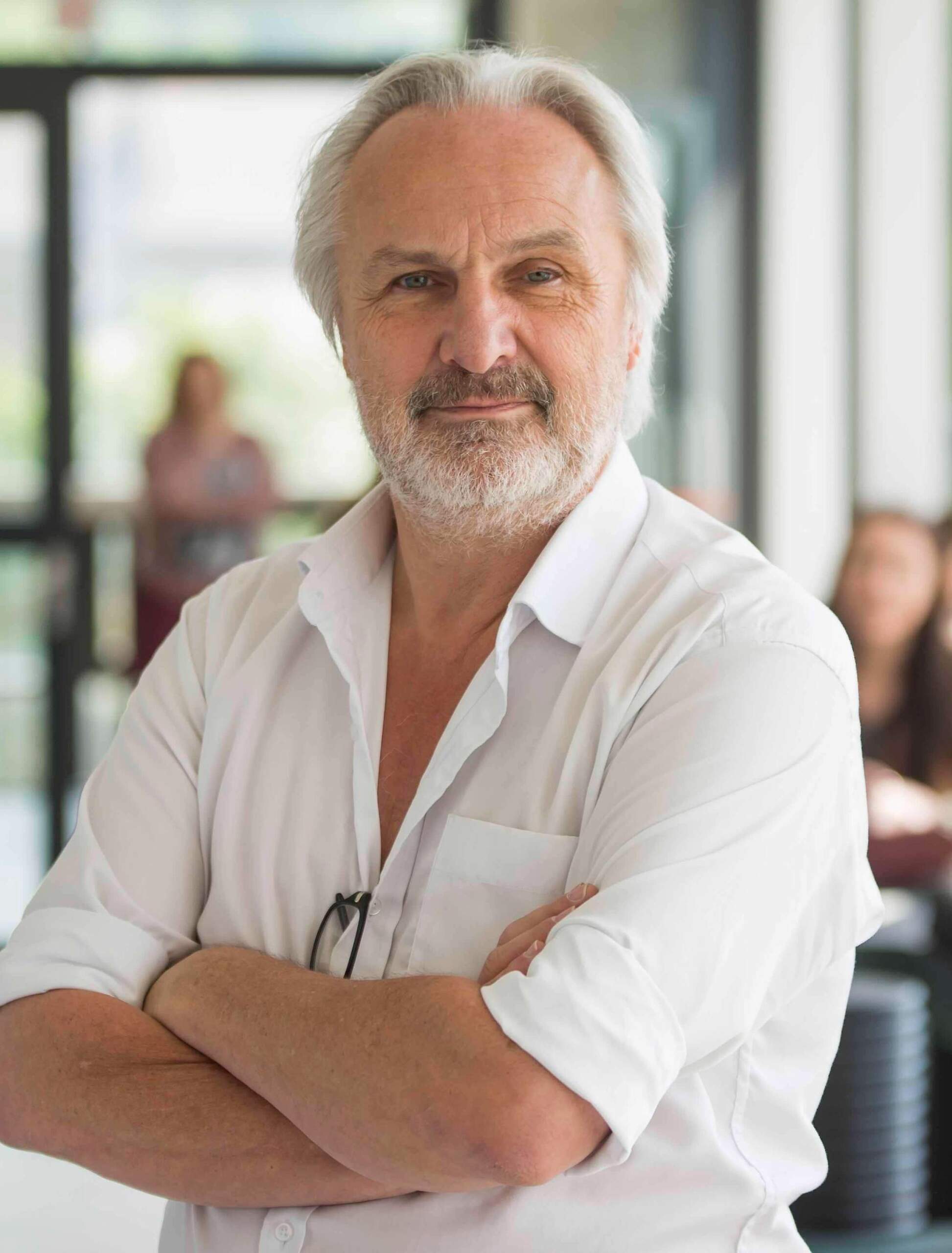
Robert van Voren (1959) is Chief Executive of the international foundation ‘Human Rights in Mental Health-FGIP’, an international foundation for mental health reform. He is also Executive Director of the Andrei Sakharov Research Center for Democratic Development and Professor at Vytautas Magnus University in Kaunas, Lithuania. Since 2000 he lives in Lithuania, and shuttles regularly to Ukraine, his main country of operation. Since the full-scale invasion he travels there on a monthly basis developing and implementing projects to support the country to deal with the psychological consequences of the war for both miliutary and civilians.
In the 1980s Robert van Voren coordinated international campaigns against the political abuse of psychiatry in the Soviet Union. Starting in 1990-1991, Van Voren and his foundation developed an extensive program to support mental health reformers in the (former) USSR to humanize mental health care. The organization gradually developed into what is now the Federation Global Initiative on Psychiatry, which has member organizations in half a dozen countries or regions.
Robert van Voren is Honorary Fellow of the British Royal College of Psychiatrists, a Honorary Member of the Ukrainian Psychiatric Association, Knight of Orange Nassau (NL) and of Duke Gediminas (LT), and was awarded the Pardes Humanitarian Prize in Mental Health in 2022.
Title of the speech
Mental health in times of war and trauma
Abstract
The war in Ukraine has not only global political consequences, but also affected other fields including mental health. While it is definitely not the only military conflict that the world faces, it is one that has the biggest influence in the way modern warfare is conducted. As a result, the psychological consequences are likewise influenced.
A traditional means of conducting war has changed fundamentally as a result of modern technology. While the whole country is subjected to massive bombing attacks with missiles and drones, and front line regions are systematically erased from the face of the earth, the frontline has become a combination of a trench war reminiscent of the First World War, with an ongoing barrage of artillery, combined with a high-tech war with drones, resulting in a frontline not more than forty kilometers wide. A new aspect is also the “human safari”, hunting ordinary citizens in front line towns and cities, making killing indiscriminate and similar to computer war games – but now with real live victims. The introduction of AI will further this change in warfare even more.
The physical and mental consequences of this type of warfare have reached a new level, as a result of the omnipresence of drones and the inability to find safe hiding places. Death rates at the front, and the high percentage of military mutilated by drones, also affect morale. The more than a million and a half military and veterans have families, and these families are part of communities, and thus virtually no Ukrainian will not be affected by the psychological consequences. In addition, many Ukrainians have to deal with the psychological consequences of the nightly bombardments with drones and ballistic missiles. After four years citizens have become exhausted due to sleepless nights, lack of electricity and heating and the absence of any light at the end of the tunnel. Those who fled the country will and return will be confronted with a completely changed and probably in some cases hostile environment.
In his presentation Robert van Voren will discuss these issues, partially based on his own experiences while working in Ukraine.
Contacts
Useful Information
Contact details of the legal entity:
GIP–Sofia Ltd.
VAT: BG202318570
Address: 1 Maliovitsa Str., 1000 Sofia
Email: sofia@gip-global.org
Tel: +359 2 987 7875